Most people find their way to intermittent fasting through the 16:8 protocol. They skip breakfast, eat between noon and 8 PM, and within a few weeks something shifts — the brain fog lifts, the scale moves, the cravings quiet down. It's a genuinely good place to start. But at some point, 16:8 stops surprising you. The results plateau. The fast starts to feel like nothing. And you start wondering if there's a next gear.
There is. It's called 18:6 intermittent fasting, and for most people who've mastered 16:8, it's the upgrade that makes things interesting again. Two more hours of fasting sounds like a small tweak. In practice, it's a fundamentally different metabolic state.
I've been doing some version of this for over 25 years. I've done 16:8, 18:6, 20:4, and the full 36-hour Monk Fast. The 18:6 window is where I spend most of my time when I'm not doing something more aggressive. Here's what you need to know.
What Is 18:6 Intermittent Fasting?
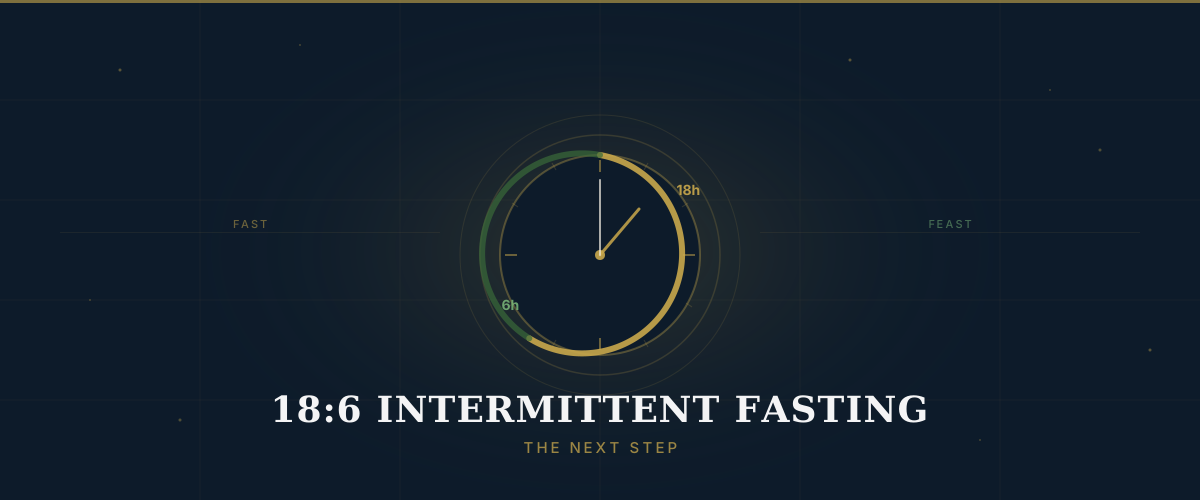
The numbers are simple: 18 hours of fasting, 6 hours of eating. Everything you consume in a day — meals, snacks, all of it — happens within a 6-hour window. The remaining 18 hours, you're fasting. Water, black coffee, plain tea: those are your only companions until the window opens.
Fasting Window (18 hours): Example: From 6 PM until 12 PM the next day.
Eating Window (6 hours): Example: From 12 PM to 6 PM.
Alternate schedule: 2 PM to 8 PM eating window works well for people who prefer a later meal.
The specific hours are less important than the consistency. Pick a window that fits your real life and keep it relatively stable. Your circadian rhythm appreciates predictability, and so does your hunger signaling once it recalibrates.
FASTING PROTOCOL COMPARISON
18:6 sits in the sweet spot — deep enough to maximize fat burning, practical enough to maintain long-term.
Why 18:6 Hits Different Than 16:8
Two extra hours may not sound like much, but metabolically, they matter. When you extend the fasted state past the 16-hour mark, a few things happen that simply don't occur in a shorter fast.
Insulin — the hormone that locks fat in storage — has been suppressed since your last meal. By hour 16, it's low. By hour 18, it's very low. That extended suppression is the window where fat oxidation runs at its highest rate. Your body isn't just using fat for fuel in the theoretical sense; it's actually burning through stored body fat at a rate that a shorter protocol doesn't consistently reach.
Autophagy — your body's cellular cleanup process, the one that won some researcher a Nobel Prize — deepens significantly with extended fasting. The 16-hour mark starts the process. The 18-hour mark is where it starts to get meaningful for most people. If cellular renewal and longevity are part of why you fast, the extra two hours aren't optional.
The Mental Clarity Effect
There's something that happens in the final hours of an 18-hour fast that 16:8 practitioners never quite experience: a particular sharpness. When the brain runs on ketones — which it starts producing more reliably in longer fasts — it operates with a clarity that glucose simply can't replicate. Some people chase this effect specifically. I've been chasing it for decades. It's one of the better things about the lifestyle.
How to Make the Switch from 16:8
If you've been doing 16:8 consistently for at least 4–6 weeks and you feel adapted — meaning the fast feels genuinely easy most days — you're ready to move to 18:6. Don't attempt this transition in your first month of fasting. The adaptation period is real and it earns you the right to push further.
The simplest approach: push your first meal back by one hour for a week, then another hour the week after. If you normally break your fast at noon, move to 1 PM for seven days. The following week, move to 2 PM. By week two, you're doing a clean 18:6 without any significant discomfort, because your hunger hormones have had time to adjust gradually rather than all at once.
Week 1 transition: Push first meal to 1 PM → 17-hour fast
Week 2 transition: Push first meal to 2 PM → 18-hour fast
From here: Hold the 18:6 window and let your body recompose
Black coffee in the late morning is your best friend during this transition. It blunts hunger, sharpens focus, and does not break the fast. The hunger you feel at 11 AM during week one is not a signal to eat — it's your ghrelin (hunger hormone) arriving on its old schedule. Give it two weeks and it will show up two hours later instead.
What to Eat in a 6-Hour Window
The compressed window creates its own discipline. Six hours is enough time for two solid meals — or a larger first meal and a lighter second. Three meals starts to feel rushed. Most 18:6 practitioners naturally settle into a two-meal pattern: a proper feast-breaking meal and a dinner. That's it. Simple.
The Fast & Feast philosophy doesn't ban food groups or demand calorie counting. What it does insist on: your first meal should be real food, not a snack. You've been fasting for 18 hours. Your body is primed to absorb nutrients efficiently. Use that window. Protein, healthy fat, vegetables. Something that keeps you fueled through the rest of the eating window without triggering a blood-sugar crash that has you hunting for dessert two hours later.
The compressed eating window also provides a natural ceiling on intake. It's genuinely difficult to overeat in six hours if you're eating real, satiating food. The math works in your favor without you having to think about it.
Who Should (and Shouldn't) Try 18:6
18:6 is a protocol for people who have already adapted to fasting. If you're brand new to intermittent fasting, start with 16:8. Get comfortable there. Then move up. Skipping the adaptation phase because you're impatient is how people quit after two miserable days and declare that fasting doesn't work.
If you're pregnant, nursing, managing a metabolic condition, or taking medications that require food at specific times, talk to a physician before changing your eating schedule. Extended fasting protocols are not for everyone in every circumstance.
For healthy adults who have already done the work to adapt to 16:8, though, 18:6 is one of the most sustainable advanced protocols available. It's not extreme. It doesn't require you to eat one meal a day or fast for 36 hours. It's just two more hours of something your body is already good at doing.
Free Download
Get the Fast & Feast Starter Guide
The 7-day jumpstart plan, fasting schedules, and feast-day meal ideas — delivered instantly.
Ready to Go Deeper?
The Fast & Feast Ultimate Lifestyle covers the complete progression: 16:8, 18:6, God Mode fasting, and the weekly Monk Fast — plus the feast-day strategies that make the whole system sustainable for life.
Get the BookThe 16:8 protocol opens the door. The 18:6 protocol is where you actually walk through it. Give it four weeks of real consistency and you'll understand why it's the window most serious fasters keep coming back to.
Frequently Asked Questions About 18:6 Intermittent Fasting
What is 18:6 intermittent fasting?
18:6 intermittent fasting means fasting for 18 consecutive hours and eating all your meals within a 6-hour window each day. For example, eating between 12 PM and 6 PM, then fasting until noon the next day. It is a step up from the popular 16:8 protocol and delivers stronger fat-burning and metabolic benefits.
Is 18:6 better than 16:8?
For most people who have already adapted to 16:8, yes. The extra two hours of fasting extend insulin suppression, deepen fat oxidation, and push autophagy further. That said, 16:8 is the right starting point — 18:6 is the natural progression once you're comfortable.
What can I eat in a 6-hour eating window?
The Fast & Feast philosophy doesn't ban any foods. The goal is to eat satisfying, nutrient-dense meals — proteins, healthy fats, vegetables — while enjoying what you love. With only a 6-hour window, you'll naturally eat less, so focus on meals that fill you up and fuel you well.
How long does it take to see results with 18:6?
If you're already adapted to 16:8, you may notice changes in body composition within 2–3 weeks of switching to 18:6. Mental clarity often improves almost immediately. Fat loss accelerates noticeably within the first month, especially around the midsection.
Can I work out while doing 18:6 fasting?
Yes — and many people prefer it. Training in the fasted state, especially in the final hours of the fast, taps into fat stores directly. If you train hard, a protein-rich first meal immediately after your workout is your best recovery strategy within the 18:6 window.