The objection comes up constantly, usually from someone who just read a wellness blog or watched a 90-second reel: "Doesn't fasting stress your body out? I heard it spikes cortisol."
It's a fair question. Cortisol has been thoroughly villainized over the last decade — it's the "stress hormone," the fat-storing, muscle-wasting, sleep-wrecking enemy of every health goal you've ever had. So the idea that intermittent fasting raises cortisol makes people understandably nervous.
Here's where I land after 25 years of doing this: yes, fasting raises cortisol. And in almost every case, that's exactly what you want.
What Cortisol Actually Does (Most People Have This Backwards)
Cortisol is not your enemy. It's a glucocorticoid hormone produced by the adrenal glands, and its primary job is energy mobilization. When you fast, cortisol rises to liberate glucose and fatty acids from storage — meaning it's actively pulling fuel out of body fat and delivering it to your brain and muscles. That's the mechanism. That's not a problem. That's the point.
The "cortisol is bad" narrative comes from a very specific version of cortisol: the kind that's chronically and persistently elevated from too little sleep, relentless work pressure, poor nutrition, and no recovery. That version absolutely causes problems — fat storage around the midsection, immune suppression, metabolic disruption, anxiety that won't quit. That's the cortisol worth worrying about.
A short spike from a 16-hour fast? That's a different animal entirely. And the research reflects it.
The Difference Between Hormetic Stress and Chronic Stress
Fasting is what exercise physiologists call a hormetic stressor — a brief, acute challenge that triggers an adaptive response disproportionately larger than the stress itself. Cold plunges work the same way. Heavy resistance training works the same way. You stress the system, the system adapts, the system gets stronger.
Chronic stress is the opposite. It's low-grade, unrelenting, and never gives the body a recovery window. Cortisol stays elevated, the adrenals never get a break, and the downstream effects accumulate over months and years.
Intermittent fasting is unambiguously in the hormetic camp — a controlled, time-limited stressor with a clear adaptation arc. Anyone lumping it in with "chronic stress" is either confused about the physiology or trying to sell you breakfast.
What the Research Actually Shows on Intermittent Fasting and Cortisol
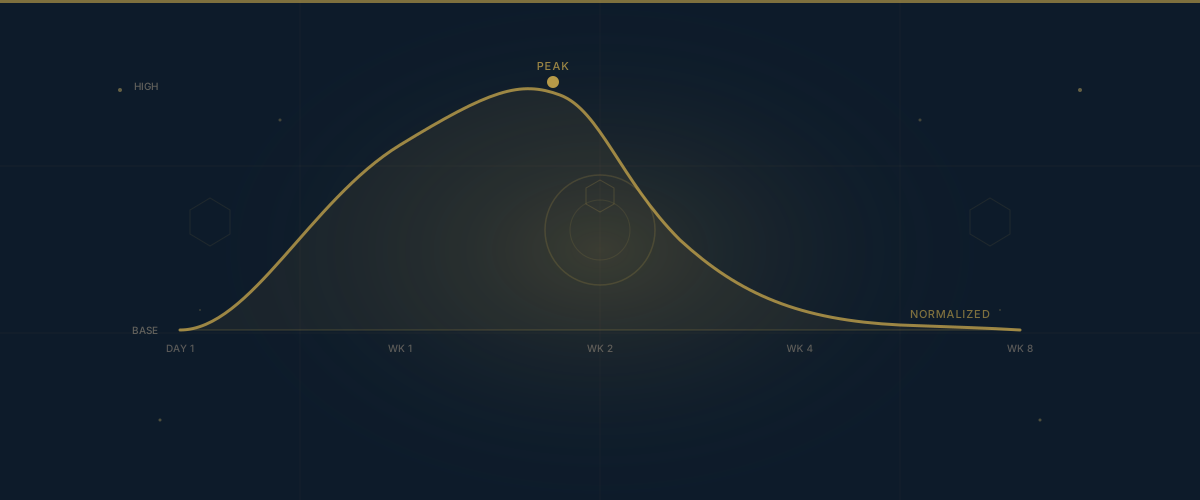
In the short term — particularly the first one to two weeks of adopting a new fasting protocol — morning cortisol levels do rise. This is expected and by design. Your body is reconfiguring its fuel delivery system. It needs to pull more energy from storage, and cortisol is the primary signal that makes that mobilization happen.
What the longer-term studies consistently show is more interesting: after four to twelve weeks of sustained fasting, cortisol levels normalize or drop below pre-fasting baselines. The body gets efficient. The hormonal output required to do the same job decreases. A 2019 study published in Obesity found that alternate-day fasting reduced the cortisol awakening response over time. Reviews of time-restricted eating protocols in metabolically healthy adults have repeatedly noted favorable cortisol regulation as a downstream effect of consistent fasting.
Cortisol Response: Short-Term vs. Long-Term Fasting
Cortisol rises briefly in the first 1–2 weeks, then normalizes as the body adapts to fat-fueled metabolism.
The pattern is consistent across protocols: short-term spike, medium-term adaptation, long-term benefit. The same arc you see with any hormetic stressor. It's not a cortisol problem. It's a cortisol training effect.
Why the Morning Spike Isn't Alarming: Cortisol naturally peaks in the first hour after waking — this is the "cortisol awakening response" (CAR) and it's a healthy, necessary part of waking up your metabolism. When you fast overnight, your fasting cortisol and your morning CAR largely overlap. You're not adding a new stress signal on top of an existing one. You're amplifying a pulse that was going to happen anyway, then it clears.
When Intermittent Fasting and Cortisol Actually Becomes a Problem
There is one genuine scenario worth taking seriously: when fasting-induced cortisol stacks on top of already-chronically-elevated cortisol from other sources.
If you're sleeping five hours a night, running on caffeine, in a brutal stretch at work, and skipping meals mostly because your life is chaotic — that's not intermittent fasting. That's just stress with an eating disorder narrative attached. Adding a structured 16:8 protocol on top of that environment can push your hormonal balance in the wrong direction.
The warning signs that cortisol may be genuinely dysregulated — fasting or not:
- Wired but exhausted — you can't sleep even when you're bone-tired
- Accumulating fat in the midsection despite eating less or training more
- Hair thinning or loss that came on gradually
- Persistent low-grade anxiety or a racing mind that won't quiet down
- Blood pressure creeping upward over months
If that's your reality, the fasting protocol itself isn't the root cause — but it may not be the right moment to be aggressively extending your fasting window either. Get the underlying stressors under control first. The fasting will still be here when you do.
A Note for Women
Women — particularly those with a history of HPA axis dysregulation, adrenal fatigue, or hormonal imbalances — tend to be more sensitive to the cortisol response triggered by extended fasting. Some research suggests that in women, fasting-induced cortisol can amplify its coupling with reproductive hormones like LH and leptin, disrupting cycle regularity if the fasting is too aggressive too fast.
This is not a reason to avoid fasting. It's a reason to start at 14:10 rather than jumping straight to 16:8, to ease in over two to three weeks, and to monitor how your cycle responds in the first month. If you're experiencing the symptoms above, that's a signal to throttle back, not abandon ship.
How to Keep Cortisol in Check While You Fast
For the vast majority of people doing intermittent fasting in a reasonably managed life, cortisol will never be a meaningful issue. But if you want to be proactive about keeping the hormonal picture clean, these are the levers that actually matter:
Sleep comes first. Eight hours of quality sleep does more for cortisol regulation than any supplement, protocol tweak, or biohack. If you're fasting religiously but sleeping six hours, you've got your priorities inverted.
Don't stack major stressors. Starting a fasting protocol the same week you start a new job, go through a breakup, or launch a training program for your first marathon is asking a lot of your adrenals. Pick your moment. The protocol works better when it's not fighting a dozen other cortisol inputs simultaneously.
Keep your eating window consistent. Cortisol is tightly regulated by circadian rhythm. A consistent daily schedule — same eating window, same fasting window — syncs your cortisol cycle with your circadian clock. Erratic windows disrupt that synchronization and make the adaptation process longer and rougher.
Break your fast with protein. A protein-forward first meal blunts the post-fast cortisol response and stabilizes blood sugar for the duration of your eating window. The difference between breaking a fast with eggs and breaking it with a bagel is not trivial.
Watch the stimulant load. One or two cups of black coffee during the fasting window: fine, well-documented to support the fast. Six cups plus pre-workout on an empty stomach: you're manufacturing a cortisol problem from scratch. Caffeine is a cortisol trigger. Use it with intention.
The Full Hormonal Picture
Cortisol is one piece of the puzzle. The Fast & Feast Ultimate Lifestyle book covers the complete hormonal framework — insulin, cortisol, HGH, and what to eat during your feast window to keep every system optimized.
Get the BookThe Bottom Line on Intermittent Fasting and Cortisol
Intermittent fasting raises cortisol in the same way that squats raise cortisol — briefly, purposefully, and with downstream benefits that clearly outweigh the short-term output. The people who should genuinely pay attention to the cortisol question are those who are already running themselves into the ground through chronic sleep deprivation, relentless stress, and poor recovery. For them, fasting can amplify an existing problem.
For everyone else — people living reasonably balanced lives who want to harness the metabolic power of a daily fasting window — intermittent fasting and cortisol are not in conflict. They're cooperating. The brief morning cortisol spike is what's burning your stored fat while you're not eating. That's not the villain. That's the mechanism you signed up for.
Twenty-five years in, my cortisol is fine. My body fat is fine. My sleep is better than it's ever been. The "fasting stresses your body out" argument is true in the same way that lifting weights stresses your muscles. That's the entire point. Stress, adapt, improve. That's how biology works.
Free Download
Get the Fast & Feast Starter Guide
The 7-day jumpstart plan, fasting schedules, and feast-day meal ideas — delivered instantly.
Frequently Asked Questions About Intermittent Fasting and Cortisol
Does intermittent fasting increase cortisol?
Yes, intermittent fasting causes a short-term rise in cortisol, particularly in the morning during the fasting window. This is a normal adaptive response that helps mobilize stored fat for energy. In studies lasting 4–12 weeks, cortisol levels normalize or decrease below pre-fasting baselines as the body adapts to fat-fueled metabolism.
Can high cortisol from fasting cause weight gain?
The brief, acute cortisol rise from fasting does not cause weight gain. Chronic, persistently elevated cortisol from ongoing life stress can promote fat storage around the midsection. If you're experiencing unexplained weight gain while fasting, look at your overall stress load, sleep quality, and whether your fasting window is consistent rather than erratic.
Should I stop fasting if I have adrenal fatigue or high stress?
Not necessarily — but modify your approach. Start with a shorter fasting window (12–14 hours) rather than jumping to 16:8. Prioritize sleep and stress reduction first. Once those are stabilized, extend your fasting window gradually. Anyone with a diagnosed adrenal condition should work with a physician before making significant dietary changes.
Does coffee during a fast raise cortisol?
Caffeine does stimulate cortisol release, particularly in the morning. One to two cups of black coffee during a fasting window is generally well-tolerated and supports the fast. High doses of caffeine — especially combined with stimulant pre-workouts on an empty stomach — can create a disproportionate cortisol spike that works against your fasting goals.
Is intermittent fasting safe for people with cortisol imbalances?
For most people with mild cortisol dysregulation, fasting is safe with some modifications: a shorter fasting window to start, consistent meal timing, prioritizing sleep, and breaking the fast with a protein-rich meal. Anyone with a formally diagnosed adrenal condition should consult a physician before making significant dietary changes.