Let me be honest with you about something: when I tell people the heart of the Fast & Feast lifestyle is a single 36-hour fast every week, I watch their faces. Some get curious. Most get a little pale. And almost everyone has the same thought: thirty-six hours? I can barely make it to lunch.
I get it. Twenty-five years ago, I didn't start with a 36-hour fast either. Nobody does. The Monk Fast is the destination, not the trailhead. And the only people who fail at it are the ones who try to skip the ramp.
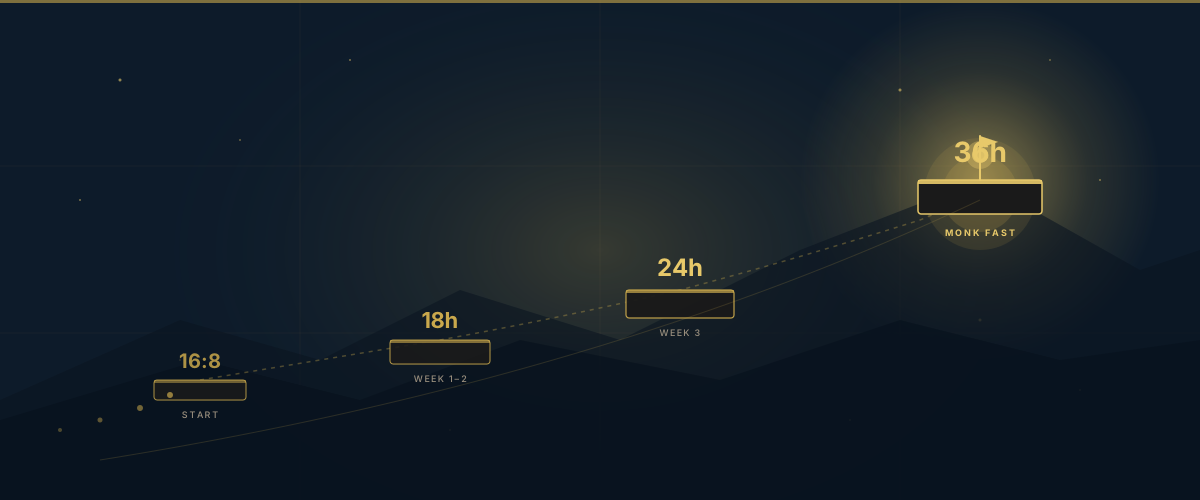
So here's what I want to give you today: the actual on-ramp. The four-week progression I'd give a friend who wants to build up to a 36-hour fast without blowing up their life, their workouts, or their willpower. We'll start with where you actually are, and we'll build, week by week, until 36 hours feels like a Tuesday.
Why the 36-Hour Monk Fast Is Worth Building Toward
Before we map the path, let me anchor why the destination matters. A weekly 36-hour fast is the single highest-leverage thing I've ever added to my health stack. It's where deep autophagy actually happens. It's where insulin sensitivity gets a meaningful reset. It's where mental clarity stops being a vibe and becomes a feature. And, almost as importantly, it's the one practice that makes the other six days of your week feel like permission to live.
If you've ever thought "I want intermittent fasting to work, but I want to actually eat too," the Monk Fast is what makes that math possible. You earn your week with one concentrated push. Here's the full Monk Fast protocol if you want to read why it sits at the center of everything.
Your 4-Week On-Ramp to a 36-Hour Fast
This is the path I'd actually take with you if we were sitting at a kitchen table. Don't skip steps. Don't try to hero it. The point of the on-ramp isn't to survive 36 hours; it's to arrive at 36 hours feeling capable, even calm. That feeling is what makes it sustainable for years, not weeks.
The 4-Week Progression
Build the legs. The summit takes care of itself.
Week 1–2: Lock In an 18-Hour Fast
Most people reading this are already comfortable with 16:8. If you're not, that's where you start. Go read the Beginner's Guide to 16:8 and come back in a month. Assuming 16:8 is solid, your first move isn't longer fasts. It's making 18:6 your default for two full weeks.
Why 18 instead of 16? Because the extra two hours are where things actually start to happen: deeper into ketone production, a lower insulin floor, and a meaningful taste of the metabolic flexibility you'll lean on later. It's not a giant leap. It's two more hours. You can do that.
What this looks like in practice: stop eating at 8 PM, break your fast at 2 PM the next day. Do this six days a week for two weeks. Track how you feel. If hunger is brutal, salt your water and add electrolytes. If 18 hours is fine, you're ready to move up.
Week 3: One 24-Hour Fast (One Meal a Day)
Your third week, you're going to do exactly one 24-hour fast. One. Not seven. Not three. One.
The cleanest way is to eat dinner Sunday night, skip everything Monday until dinner, and break the fast with a real meal Monday evening. That's 24 hours, dinner-to-dinner. You'll be hungry. You'll probably be cranky for a couple hours in the afternoon. You'll also discover something: you don't actually fall apart. You don't faint at your desk. You don't lose your job. You just get hungry, and then you get past it.
This week is psychological as much as physiological. The story you've been telling yourself (I have to eat every few hours or I'll die) gets overwritten by direct experience. Once that story breaks, the rest of the on-ramp is downhill.
Week 4: Your First Monk Fast
Now we go for the full 36. Eat a real, satisfying dinner Sunday night around 7 PM. Drink only water, black coffee, and plain tea until breakfast Tuesday morning around 7 AM. That's 36 hours. That's the Monk Fast.
The trick on your first one is to plan it like an event, not endure it like a punishment. Pick a day with low social pressure. Schedule the easy parts of your work for Monday afternoon (the toughest stretch). Plan a beautiful breakfast for Tuesday morning that you actually look forward to. The fast becomes the runway to a feast, not a deprivation followed by collapse.
Practical Rule: Don't change two variables at once. If you're starting the on-ramp, don't also start a new training program, a new sleep schedule, or a new diet philosophy in the same month. Pick one thing. Let it land. Stack the rest later.
What helps in the moment: a glass of water with a quarter teaspoon of salt, a 15-minute walk, or a black coffee. None of these break your fast, and any of them can carry you through a rough hour.
Common Pitfalls (And Why They're Not Failures)
Before you head into this ramp, I want to validate a few things you're probably going to feel, because most people meet these and quit, thinking they "can't fast." You can. You just hit the normal spots that nobody warned you about.
- The 4 PM cliff. Around hour 20–24 of any longer fast, energy and mood drop. This is real. It's not a sign you're broken. Walk, drink salted water, ride it out. It usually passes inside an hour.
- Sleep gets weird the first time. Some people sleep deeper, some lighter, some both in the same night. Don't draw conclusions from a single fast. By the third Monk Fast, sleep usually settles into "noticeably better."
- Social friction. "Are you sure you don't want anything?" gets old fast. The answer that works: "I had a big meal earlier and I'm not hungry yet." End of conversation. Don't try to convert anyone over dinner.
- Hunger is a wave, not a tide. Hunger comes in waves of 15–20 minutes. If you can ride the wave instead of reacting to it, the next half hour is usually neutral. This single insight is what most experienced fasters wish they'd known on day one.
- The "this week is the wrong week" trap. There will always be a reason next week is better than this week. Pick a date. Put it on the calendar. Treat it like an appointment with yourself you wouldn't cancel on a friend.
What to Expect at the Finish Line
If you follow this on-ramp, here's the most likely shape of your story: weeks 1–2 feel like a small adjustment. Week 3 feels like a milestone: the first 24-hour fast almost always becomes a lifelong reference point. Week 4 will be the hardest day mentally before it happens, and the most rewarding day after.
By month two, the Monk Fast stops being something you survive and becomes something you anticipate. You'll get protective of it. People close to you will start asking what you've changed. The thing you couldn't imagine doing a few weeks ago will be the part of your week you wouldn't trade for anything.
Free Download
Get the Fast & Feast Starter Guide
The 7-day jumpstart plan, fasting schedules, and feast-day meal ideas, delivered instantly.
The Full Protocol, Start to Summit
The Fast & Feast Ultimate Lifestyle book lays out the on-ramp, the Monk Fast, the feast-day blueprint, and the long-game lifestyle: twenty-five years of what actually works, in one place.
Get the BookThe on-ramp is the whole game. The 36-hour fast is straightforward biology. It's the climb that builds the legs that make it possible. So start where you are. Take the next step. Then take the one after that. Twenty-five years in, I can promise you this: the path is much shorter than the trailhead makes it look.
Frequently Asked Questions About Building Up to a 36-Hour Fast
How long does it take to build up to a 36-hour fast?
For most people who already practice 16:8, the on-ramp to a 36-hour fast takes about four weeks: two weeks at 18:6, one week with a single 24-hour fast, and then the first 36-hour Monk Fast in week four. If you're newer to fasting, add a month of consistent 16:8 before starting the on-ramp.
Should I try a 24-hour fast before a 36-hour fast?
Yes, and not just for biological reasons. The 24-hour fast is the psychological bridge between "I eat every few hours" and "I can go a full day." Once you've done one, the leap to 36 hours is much smaller than it looks on paper. Skipping this step is the most common reason first-time Monk Fasts get abandoned.
What can I drink during a 36-hour fast?
Water (ideally with a pinch of salt for electrolytes), black coffee, plain tea, and unsweetened herbal tea. Anything with calories or sweeteners breaks the fast. Avoid bone broth on a true Monk Fast; save it for the easier 24-hour fasts if you need it.
Will I lose muscle if I do a weekly 36-hour fast?
No. A single 36-hour fast per week is well within the window where the body protects lean tissue and ramps up growth hormone instead of breaking down muscle. Just make sure your other six days hit adequate protein and you continue to train. The Monk Fast is anabolic by week, even if it's catabolic by hour.
What's the best day of the week to do a Monk Fast?
Most people land on Monday: eat Sunday dinner, fast through Monday, break with breakfast Tuesday morning. It clears the indulgence of the weekend, gives your week a clean start, and the toughest hours fall during the workday when you're already busy. Pick the day that fits your life and stay consistent. Predictability is the secret weapon.